


1. INTRODUCTION
For many years, natural plant extracts have been utilized, and recently their potential has begun to be studied as ingredients in alternative therapies and as food preservatives. Their antibacterial properties can be used to extend the shelf life of fresh and ready-to-eat foods, and they can also act as natural ingredients in pharmaceutical medicine and therapy. (Mesomo et al., 2013). Essential oils (EOs) are volatile aromatic substances extracted from various parts of plants. Traditional methods applied to extract and separate EOs consist of steam distillation and supercriticality to date (Shukla et al., 2019); (Kotronoulas et al., 2023). Among natural herbal plants, ginger is a perennial herb in the Zingiberaceae group. Ginger originates from tropical countries in Southeast Asia, after which it began to be planted throughout China [4]. Ginger is used as a spice in cooking and beverages because it has a distinctive aroma and spicy taste.
Ginger contains many bioactive chemicals, especially bioactive phenols such as gingerol, shogaol, and zingerone (Kieliszek et al., 2020). Ginger essential oil (GEO) is obtained from the rhizome of the ginger plant and is known to have a distinctive aroma and unique biological activity. GEO has undergone significant development in its use in the pharmaceutical and industrial fields (Mesomo et al., 2013). Ginger rhizomes which are the source of GEO contain small amounts of sesquiterpene and monoterpene hydrocarbon compounds, such as cineol, linalool, saron, neder, citrus, and geraniol (Andari & Ella, 2019)(de Lima et al., 2020). Because it is a safe and valuable natural compound, GEO has the potential to be used in the treatment of respiratory and digestive system disorders (Mahboubi, 2019).
Some countries use lemongrass (C. citratus) as medicine (Riquelme et al., 2017). The lemon flavor is very strong because it has a high citral content, which is about 75% of the ingredients (Mendes et al., 2020). The main active ingredients in lemongrass essential oil (EO) include limonene, myrcene, citral, geraniol, citronellol, geranyl acetate, neral, and nerol (Kumar et al., 2015). Although myrcene and limonene are known to have a pleasant aroma, two related molecules, neral (cis-citral) and geranial (trans-citral), make up citral, the major active component in LEO. Small quantities of geraniol, geranyl acetate, and monoterpene olefins are also present in LEO (Verma et al., 2015). Usually ranging about 45%, the citral content in this oil may vary significantly depending on factors including aspects of the growth environment, genetic type of the plant, climate conditions, harvest period, and extraction technique used. Generally speaking, LEO quality is evaluated using citral levels; high citral concentrations indicate a better degree of purity (Kpoviessi et al., 2014).
LEO falls under quality based on ISO 3217:1974 criterion if it has at least 75% citral. To ensure this quality, the use of appropriate technology in the extraction and separation process is a crucial factor. The selection of processing methods generally considers the chemical composition, physicochemical properties, economic efficiency, and the final purpose of using the EO. In several countries, lemongrass (C. citratus) has been used as a medicinal ingredient (Riquelme et al., 2017). The strong lemon flavor of lemongrass comes from the high content of citral, which reaches around 75% of the total components (Mendes et al., 2020).
Lemongrass oil is useful as antiseptic aromatherapy for external and internal wounds. The benefits of inhaling lemongrass aromatherapy are that it will stimulate the mind and help overcome seizures, nervousness, dizziness, and other diseases including Alzheimer’s and Parkinson’s. LEO also has properties that help smoothen blood circulation and rejuvenate skin tissue (Sudiarta et al., 2013). In this study, the author discusses LEO and ginger EO. Lemongrass leaves contain EOs, which include monoterpene compounds such as citral and geraniol.
This oil is used orally as medication since it has antibacterial and antifungal qualities; it is used, for instance, to treat swollen teeth and gums or sore throats (Do et al., 2021). Citral, an ionic substance, is produced from LEO in great part. High volatile percentage of LEO gives it a powerful scent (75% to 85%) (Bekele et al., 2019). LEO is a raw component used in the soap and cosmetics sectors (Mukarram et al., 2022); (Oladeji et al., 2019). This work is meant to research the properties of ginger, lemongrass, and their combinations.
2. MATERIALS AND METHODS
This study employs an experimental laboratory approach, wherein EOs are extracted via steam distillation. Subsequently, the bioactive compound content is analyzed using quantitative phytochemical tests and the Gas Chromatography–Mass Spectrometry (GC-MS) instrument.
2.1. Study Design
This laboratory experimental study aims to evaluate the chemical composition of EOs derived from ginger (Zingiber officinale) and lemongrass (C. citratus) cultivated in the West Sumatra region of Indonesia. The research employs phytochemical and instrumental analysis to identify the bioactive compounds present in the EOs of each plant, as well as their combination. The study seeks to elucidate the therapeutic potential of these EOs based on their active compound content.
2.2. Study Instrument
The primary instruments employed in this study include a steam distillation apparatus and a GC-MS analytical instrument. The extraction of EO was conducted using the steam distillation method, which is the standard technique for obtaining EOs from plant materials. For the analysis of chemical compounds, a Shimadzu GCMS-2010 type GC-MS instrument was utilized. This instrument is equipped with an RTx-5 ms column (30 m length, 0.25 mm internal diameter, and 0.2 µm film thickness). Helium served as the carrier gas with an inlet pressure of 14.4 kPa and a flow rate of 3.0 mL/min. The injector temperature was maintained at 220°C, and the detector temperature at 250°C.
The column temperature programming commenced at 60°C for 1 min, increased to 150°C at a rate of 2°C/min, then to 160°C at a rate of 3°C/min, and finally to 240°C at a rate of 5°C/min, where it was held for 2 min. A split ratio setting of 1:200 was employed for optimal compound separation. Compound identification was performed by matching the obtained mass spectra with the data library from the National Institute of Standards and Technology (NIST) and comparing the relative retention index (RRI) values with the published literature.
2.3. Data Collection
Data collection commenced with the sampling of plant materials. Ginger was sourced from a plantation situated in Bukit Karan Village, Rawang District, South Padang Regency, West Sumatra. Concurrently, lemongrass was procured from a plantation in Korong Sungai Pinang, Kasang Village, Padang Pariaman Regency, West Sumatra. The plant part utilized was the fresh rhizome, which was meticulously washed and sectioned into small pieces prior to undergoing steam distillation for EO extraction. Post-extraction, the EO was collected and stored in dark glass bottles to avert photodegradation. Subsequently, the EO samples were subjected to analysis via GC-MS to ascertain the profile of volatile compounds present. The analytical results, comprising chromatograms and mass spectra, facilitated the identification of the types and concentrations of bioactive compounds in each sample
3. RESULTS
3.1. Ginger EO Phytochemical Screening and Characterization
All quantitative analyses performed on the EO samples yielded positive results regarding the presence of phytochemical compounds. Utilizing GC-MS, a total of 25 major compounds were successfully identified in the ginger EO. In addition, five other compounds were detected based on chromatogram signals, although they have not yet been definitively identified. The chemical composition of ginger EO is detailed in Table 1, which enumerates the active compounds from ginger cultivated in Bukit Karan Village.
The primary constituents of ginger EO are alpha-curcumene benzene at 34.19%, zingiberene and 1,3-cyclohexadiene at 28.97%, beta-sesquiphellandrene at 14.04%, beta-tumerone at 4.31%, and camphene (2,2-dimethyl-3-methyl) at 1.72%. Collectively, these five compounds constitute 83.23% of the total identified compounds, thereby classifying them as the principal components of ginger EO.
Table 1
Essential oils derived from ginger grown in Bukit Karan village.
Figure 1 presents the mass spectrum of the ginger EO oil under analysis, illustrating the mass spectrum patterns of volatile compounds derived from ginger cultivated in Bukit Karan Village.
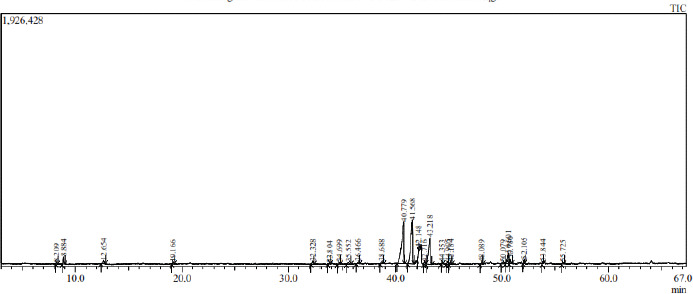
The primary compounds identified exhibit significant pharmacological activity, positioning ginger EO as a promising candidate for the development of natural therapies. Alpha-curcumene and zingiberene are recognized for their anti-inflammatory and antioxidant properties, which are crucial in the treatment of inflammation-based chronic diseases. Beta-sesquiphellandrene has been linked to antimicrobial activity, rendering it useful for infection prevention. Beta-tumerone demonstrates potential as a neuroprotective and anticancer agent, as evidenced by several experimental studies.
In addition, camphene is known for its antilipid and cholesterol-lowering effects, which are advantageous in the treatment of metabolic diseases. Consequently, the identification of these active compounds not only enhances the understanding of the chemical composition of local ginger but also presents substantial opportunities for applications in the health sector, particularly in the development of herbal medicines, aromatherapy, and complementary therapies.
3.2 LEO compounds
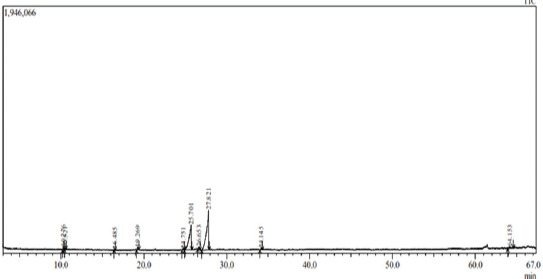
GC-MS studies successfully identified 10 key compounds in LEO. The chemical composition of LEO is shown in Table 2, which presents the analysis results of lemongrass cultivated in the Korong Sungai Pinang area, Kasang Village, Padang Pariaman Regency, West Sumatra Province. The main compounds found include citral (2,6-octadienal, 3,7-dimethyl) at 56.71%, citral (2,6-nonadienal) at 1.45%, 2-tetradecyloxirane at 2.68%, (2E,6Z)-2,6-nonadienal at 1.45%, and isoborneol (bicyclo[2.2.1]). Together, these five main compounds account for approximately 96.68% of all identified compounds. Therefore, the most dominant and significant contributors to the LEO composition are citral (2,6-octadienal, 3,7-dimethyl), 2-tetradecyloxirane, (2E,6Z)-2,6-nonadienal, and isoborneol bicyclo.
Table 2
Lemongrass planted in Padang Pariaman Regency’s Korong Sungai Pinang area, Kasang Village. Chemical composition of acquired essential oils.
The content of citral, which is the main component, is widely known to have antimicrobial, anti-inflammatory, and anticancer activities, making it highly promising for use in topical and systemic drug formulations. The compounds 2-tetradecyloxirane and nonadienal isomer contribute to its antioxidant and antiseptic properties, which are useful in wound healing and protecting cells from oxidative stress. Meanwhile, isoborneol is known to have antiviral and neuroprotective effects, and also shows potential for use in the treatment of viral infections and neurological disorders.
Thus, the combination of active compounds found in LEO makes it a very promising natural therapeutic agent for the development of pharmaceutical products, health supplements, and alternative therapies.
3.3 Phytochemical Screening and Characterization of Ginger and LEOs
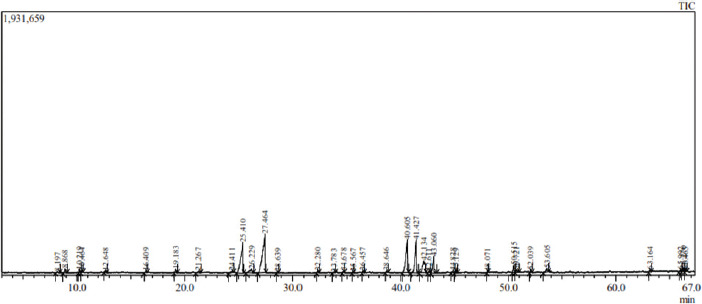
Utilizing the GC-MS methodology, a comprehensive analysis successfully identified 35 major chemical constituents within the EO mixture of lemongrass and ginger. Table 3 delineates the chemical composition of the combined EOs derived from lemongrass and ginger cultivated in West Sumatra. Among the dominant compounds identified are citral ((2E)-3,7-dimethyl-2) at 25.31%, citral (2,6-octadienal, 3,7-dimethyl) at 17.83%, alpha-curcumene benzene at 14.42%, zingiberene (1,3-cyclohexadiene) at 12.19%, and beta-bisabolone at 7.25%. Collectively, these five principal compounds account for 77% of the total identified constituents, thereby classifying them as the primary components of the lemongrass and GEO mixture.
Table 3
Lemongrass and ginger essential oil chemical compositions.
Figure 3 illustrates the mass spectrum patterns from the GC-MS analysis, showcasing the spectra of volatile compounds present in the EOs resulting from the combination of these two plants. The identified compounds exhibit various promising pharmacological activities and have been extensively studied in the context of health applications. Citral is recognized for its antibacterial, antifungal, anti-inflammatory, and relaxation agent properties, rendering it frequently utilized in aromatherapy and alternative medicine. Alpha-curcumene and zingiberene, characteristic components of GEO, possess potential as antioxidants and anticancer agents, in addition to supporting the immune system.
Beta-bisabolone demonstrates strong anti-inflammatory and antimicrobial effects and may contribute to accelerating wound healing and reducing inflammation. Consequently, the presence of these compounds in the EO mixture of lemongrass and ginger underscores significant applicative potential in the development of health products, natural therapies, and natural product-based medicine.
4. DISCUSSION
Because of their synergistic effects originating from the mix of their several components, rather than from the isolation of a single component, EOs have a broad range of uses in both pharmacological and cosmetic sectors (Major & Krpan, 2012). EOs have mostly preservative, antibacterial, antifungal, anti-inflammatory, expectorant, sedative, analgesic, and antioxidant qualities (Bellik, 2014). Among other considerations, the origin of the plant material, growing conditions, environmental elements, and extraction technique usually determine the chemical composition of EOs (Madrigal-redondo, 2017).
The chemical composition of GEO is influenced by the rhizomes’ freshness or dehydrating conditions, geographical location, and the extraction method. It’s taken from ginger rhizomes. The extraction technique among other things affects the chemical makeup of ginger oil, the freshness or curing process of the rhizomes, and geographical conditions. Consequently, it is crucial to standardize GEO according to its primary components and other bioactive compounds, as the oil’s biological activity is contingent upon its chemical constituents. A range of experimental and preclinical research has confirmed the antibacterial, antifungal, analgesic, anti-inflammatory, antiulcer, immunomodulating, relaxing, and warming qualities of GEO (Mahboubi, 2019).
Curcumene, zingiberene, and zingerone are bioactive compounds in ginger that have antibacterial properties and act as catalytic reducing agents (I. Hazim, KY Abd, 2020). In addition, curcumene, bisabolene, zingiberene, and sesquiphellandrene can inhibit weed germination. So, GEO is effective as a bioherbicide without causing phytotoxicity (Ibáñez & Blázquez, 2019). Compounds such as ar-curcumene, bisabolene, linalool, caryophyllene, and eucalyptol also show antifungal activity. GEO microspheres have been formulated for applications in the food and medical fields (Hu et al., 2018).
The main elements of this oil include zingiberene, ar-curcumene, citral, α-bisabolene, geranial, and camphene, which help to produce anti-inflammatory, analgesic, anticancer, antioxidant, antinociceptive, and antitussive effects. In addition, having phytoestrogenic action are terpenes found in ginger oil (Funk et al., 2016). Zingiberene and zingiberol (38.9%), ar-curcumene (17.7%), β-sesquiphellandrene and β-bisabolene (11%), and β-phellandrene (4.9%) define the composition of ginger oil from fresh rhizome distillation (Bangalore market). Australian GEO, meanwhile, mostly consists in zingiberene (20–28%), ar-curcumene (6–10%), β-sesquiphellandrene (7–11%), and β-bisabolene (5–9%) (Jordan, 1971; Sitorus & Syaukani, 2020).
ISO 16928:2014 requires pale yellow to golden yellow ginger oil from China to contain α-zingiberene (29-40%), β-sesquiphellandrene (10-14%), ar-curcumene (5-11%), camphene (4.5-10%), and β-bisabolene (2.5-9%). For example, yellow ginger oil from India contains α-zingiberene (35-40%), β-sesquiphellandrene (11.5-13.5%), ar-curcumene (6.5-9%), camphene (5–8%), and β-bisabolene (2.5–5.5%). The pale yellow EO from West Africa contains α-zingiberene (23–45%), β-sesquiphellandrene (8–17%), ar-curcumene (3–11%), camphene (0.2–12%), and β-bisabolene (3–7%). The EO from unpeeled rhizome cultivars from Northeast India contains camphene (8.49%), neral (4.95%), geranial (12.36%), zingiberene (20.98%), and β-sesquiphellandrene (7.96%) at 2.22–4.17% w/v. (Ravi Kiran et al., 2013).
Condition geographical influence composition chemistry oil ginger. Using hydrodistillation, oil ginger is extracted from three regions in India: Mizoram, Chennai, and two locations in Sikkim. These regions contain a variety of compounds, including zingiberene (10.5–16.6%), ar-curcumene (2.9–9.8%), β-sesquiphellandrene (5.8–7.2%), e-citral (7.4–10.5%), z-citral (5.3–7%), o-cymene (0.9–6.5%), camphene (0.9–7.6%), and limonene (1.3–6.4%) (Raina et al., 2005). On the basis of fresh rhizomes obtained from the Bangalore market, the following compounds were found: ar-curcumene (17.7%), β-sesquiphellandrene and β-bisabolene (11%), β-phellandrene (4.9%), and zingiberene and zingiberol (38.9%) (Do et al., 2021). The Australian origin of oil ginger is defined by the presence of zingiberene, which accounts for 20–28%, ar-curcumene, which accounts for 6–10%, β-sesquiphellandrene, which accounts for 7–11%, and β-bisabolene, which accounts for 5–9%.
In LEO, the main component, that is, about 60–80% consists of neral, isoneral, geranial, isogeranial, geraniol, geranyl acetate, citronellal, citronellol, germacrene-D, and elemol. One other main compounds is citral, which is a mixture of two isomers: geranial (E isomer) and neral (Z isomer). According to literature, so that oil C. citratus EO quality, content citral must be at least 75% (Majewska et al., 2019). Quality and quantity of lemongrass oil is greatly affected by the time of harvest, because composition of oil is related to the stage of development of plants and organs. Influence technique harvest usually minimal, but use fertilizer and existence mold rhizosphere can increase level citral (Shaikh et al., 2019). The ratio leaf young and adult moment harvest also affects concentration citral and quality oil (Tajidin, 2012).
LEO is rich in bioactive compounds, which provides effective antifungal, antibacterial, antiviral, anticancer, and antioxidant properties (Mukarram et al., 2022). Citral alone is used in the production of fragrances, cosmetics, food ingredients, and pharmaceutical products. Devi et al.’s research shows that citral from leaves and roots of C. citratus is capable of triggering vasodilation in rats. Bayala et al. confirmed effect antioxidant and cytotoxic oil LEO against various cell cancer prostate and glioblastoma. Benefits of this oil are comparable to that of pure citral, which is considered as the main component with antiproliferative effects. Other studies also report significant in vivo antibacterial and anti-inflammatory effects, confirming citral as a potential agent for the treatment of various diseases in humans and animals (Bayala et al., 2018) (Long et al., 2019).
5. CONCLUSION
5.1 Conclusion
Considering the results of this investigation, it is clear that LEOs and ginger (Zingiber officinale) have the main bioactive elements that are rather significant for many uses in industry and medicine. Alpha-curcumene, benzene, zingiberene, 1,3-cyclohexadiene, beta-sesquiphellandrene, tumerone, and camphene 2,2-dimethyl-3-methanol molecules dominate ginger oil; these compounds taken together offer extensive biological advantages. LEO, meanwhile, is high in citral, particularly 2,6-octadienal, 3,7-dimethyl and (2E,6Z)-2,6-nonadienal, and isoborneol bicyclo. The combination of these compounds strengthens the potential of ginger and LEOs as natural sources with antibacterial, antifungal, anti-inflammatory, and other pharmacological activities.
These findings open up opportunities for the development of sustainable therapeutic and commercial products, while stressing the need for standardizing and a thorough knowledge of chemical composition as the secret to the efficient use of basic oils in numerous domains.
5.2 Limitation
However, this study has several limitations, including variations in chemical composition that may be influenced by geographical and environmental factors, which were not fully controlled. In addition, the study did not directly evaluate the biological effectiveness of the EOs in clinical or commercial settings. Therefore, further research is needed to ensure consistency in quality and to assess the potential bioactivity through preclinical and clinical studies.
ACKNOWLEDGEMENT
The authors thank Lincoln University College for their cooperation in this research. The authors confirm that no artificial intelligence (AI) tools were used in the content analysis, research process, or data processing of this study. However, the authors utilized Paperpal tools solely for the purpose of language proofreading and grammar correction to enhance the clarity of the manuscript.

